PhD Research Making Waves in the Medical Imaging Market: A Spotlight on AI for MRI Patents
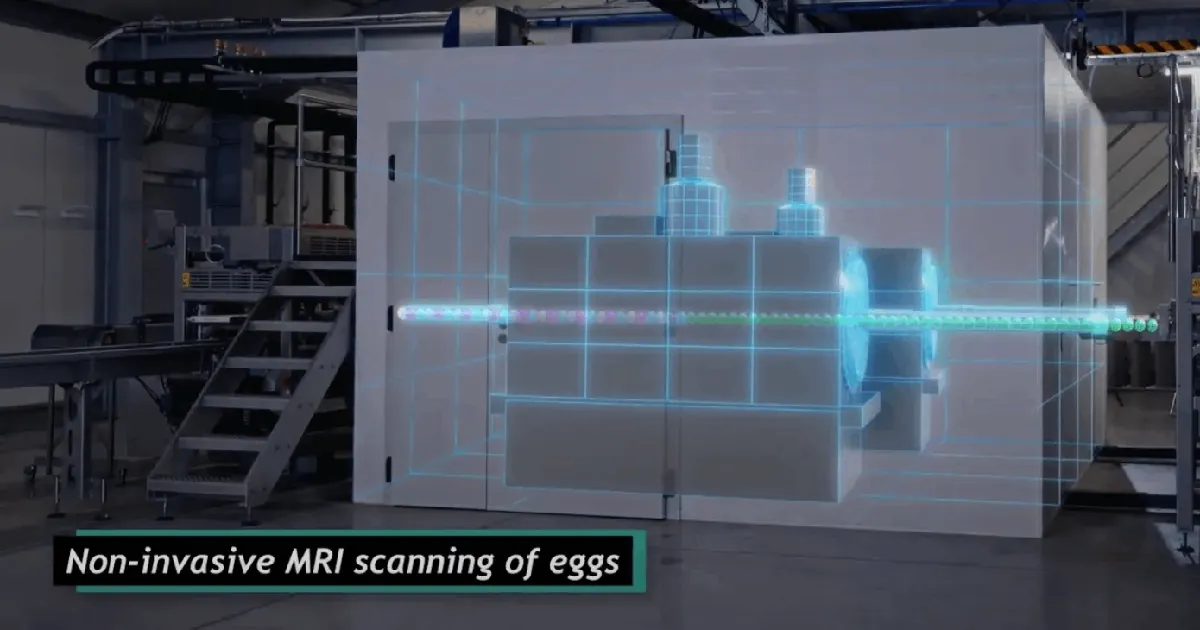
"Orbem, a Munich-based startup, raises $31.8M for innovative AI-powered MRI technology — targeting poultry eggs first, then humans." When the press release crossed my desk, I almost dismissed it as another generic deep-tech round. Then I read the actual patent filings, and realised it is one of the most quietly important PhD-to-startup stories of the year.
The unlikely starting point: eggs
Most countries' poultry industries cull billions of male chicks every year because they cannot lay eggs and are uneconomical to raise for meat. Orbem's Cheggy machine uses a miniaturised MRI scanner combined with a deep-learning classifier to determine the sex of a chick inside the egg, on day nine of incubation, at industrial speed (24,000 eggs per hour).
Male eggs are diverted to pet-food production before the chick develops any pain perception. The animal-welfare case is enormous; the commercial case is even bigger.
The real innovation: MRI without the cost
Traditional medical MRI machines cost between $1M and $3M and take 30–60 minutes per scan. Orbem's contribution is a combination of:
- A purpose-built, far smaller magnet (under 1 Tesla) that trades resolution for throughput.
- An AI model that compensates for the lower-fidelity raw signal — effectively learning to "upsample" the data toward diagnostic quality.
- A patent portfolio focused on sequence design rather than hardware, which is where the long-term moat sits.
From eggs to humans
The roadmap, on the second page of the Series B deck, is the eyebrow-raising bit:
- Phase 1 (now) — animal applications: poultry, then aquaculture, then meat-industry quality control.
- Phase 2 (2025–26) — veterinary diagnostics for dogs, cats and racehorses.
- Phase 3 (2027+) — point-of-care human MRI in clinics and even pharmacies.
The "MRI in a pharmacy" idea sounds science-fictional, but the unit economics — based on the cost curve from the egg-scanning machine — would put a basic-scan price at roughly $40. Today the same scan costs $400–$1,200.
Why this is a PhD story
Orbem's founders came directly out of the Technical University of Munich's hyperspectral imaging lab. Their patents read like dissertation chapters because they essentially are dissertation chapters, productised. It is a useful reminder that the most defensible deep-tech still comes from PhD research, not from a weekend's prompt-engineering with ChatGPT.
What to watch
The two things that will determine whether Orbem becomes the next ASML of medical imaging or a footnote:
- Regulatory acceptance of "AI-corrected MRI" by the FDA and EMA — the political fight is going to be ugly.
- Whether existing MRI vendors (Siemens, GE, Philips) acquire or sue. Both seem likely; the order matters.
Either way, the story is a perfect example of why "AI" headlines miss the point. The real disruption is in the boring stuff — magnets, sequences, sensors — guided by the AI rather than performed by it.