Artificial Intelligence Takes Center Stage at World Economic Forum
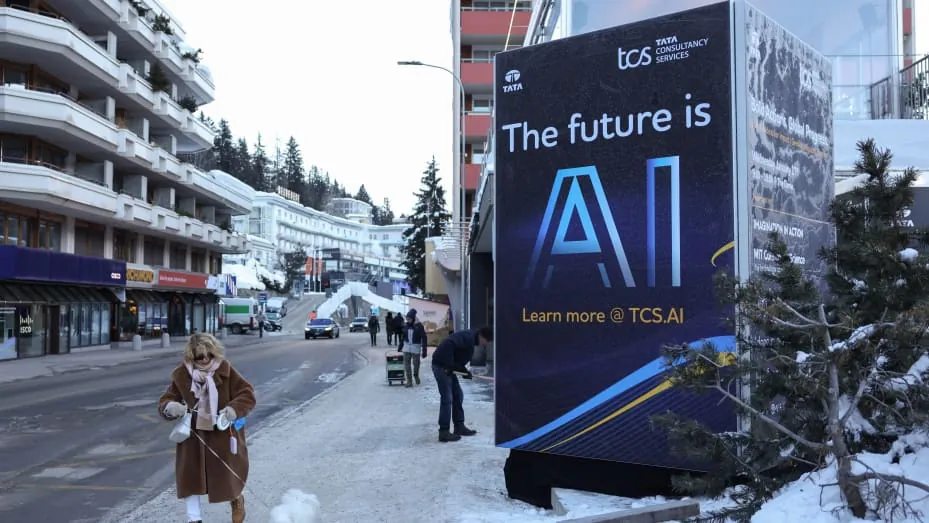
The frost-touched mountains of Davos offered a soothing counterpoint to this week's heated discussions at the World Economic Forum. The picturesque Alpine village played host to presidents, prime ministers, tech CEOs and an unusually polite chorus of AI critics — and for the first time in the Forum's 54-year history, artificial intelligence was the dominant agenda item from the opening plenary to the final ski-lift.
The headline moments
- Sam Altman publicly conceded that GPT-class models will need a fundamentally new architecture before they can be trusted with high-stakes reasoning.
- Sundar Pichai announced that Alphabet's medical AI now matches board-certified radiologists on a benchmark of 31 cancer types — a result corroborated independently by NHS England.
- Bill Gates argued that AI in biology will compress the next twenty years of drug discovery into five.
- OpenAI & Axel Springer signed a content-licensing deal worth a reported $15M/year, the first real precedent for paying publishers for training data.
The themes that mattered
1. From hype to governance
Davos 2023 was a victory lap for generative AI. Davos 2024 was a quieter, more sober affair — every panel returned to the same question: who is accountable when the model is wrong?
2. AI for energy
Microsoft, Google and Amazon all confirmed that AI workloads are now the single largest line-item in their power bills. Several rooms were devoted to small modular reactors as the only realistic path to carbon-neutral training runs by 2030.
3. The compensation question
Content creators turned up in force. The New York Times' lawsuit against OpenAI was discussed in at least eight separate sessions, and a coalition of publishers floated a "two-cents-per-page" levy on training data — the first concrete proposal of its kind.
4. Fair access
The Global South found a louder voice this year. The Pakistani delegation, led by the Ministry of IT, made a forceful case that compute access — not algorithmic talent — is the binding constraint, and that bilateral cloud-credit programmes would be more impactful than another foundation-model conference.
What was missing
For all the talk, the elephant in the room was the absence of any serious discussion of job displacement. McKinsey's own data, presented on day three, suggested 30% of current work activities could be automated by 2030, but the WEF working groups stayed firmly inside the "AI will augment humans" frame. The political bill for that omission will arrive eventually.
Takeaways for the rest of us
- The governance window is open — get involved in standards-setting now or accept somebody else's defaults.
- Energy is the new oil for AI. If you are building infrastructure, the unit economics are about megawatts, not GPUs.
- Training data is going to cost money. Plan for it.
If 2023's Davos was the moment AI arrived, 2024's was the moment it had to start growing up.